
This investigative report provides a comprehensive analysis of the tax ramifications of being scammed, offering actionable guidance for victims, supported by expert insights, legal frameworks, and IRS regulations. It weaves in a personal case study for enhanced relatability.
Full Report: Navigating the Aftermath: From Deception to Tax Deduction for Scam Victims

Battered but not broken—like so many scam victims. Still pushing forward through the storm, carrying truth, evidence, and a call for accountability.
Table of Contents
I. Introduction
The proliferation of sophisticated scams represents a significant threat to financial stability for individuals and businesses worldwide. As fraudsters become more adept at exploiting digital platforms and human trust, the need for clear guidance on the aftermath, particularly concerning tax implications, has never been more critical. The Internal Revenue Service (IRS) continually issues warnings about prevalent fraudulent schemes, from phishing and investment scams to elaborate fake charities, underscoring the pervasive nature of this issue.
This report provides a comprehensive analysis of the tax ramifications for scam victims, focusing on available deductions, qualification criteria, limited recovery options, and broader financial impacts. It aims to offer actionable guidance, supported by expert insights, established legal frameworks, and current IRS regulations, grounded in a real-world context.
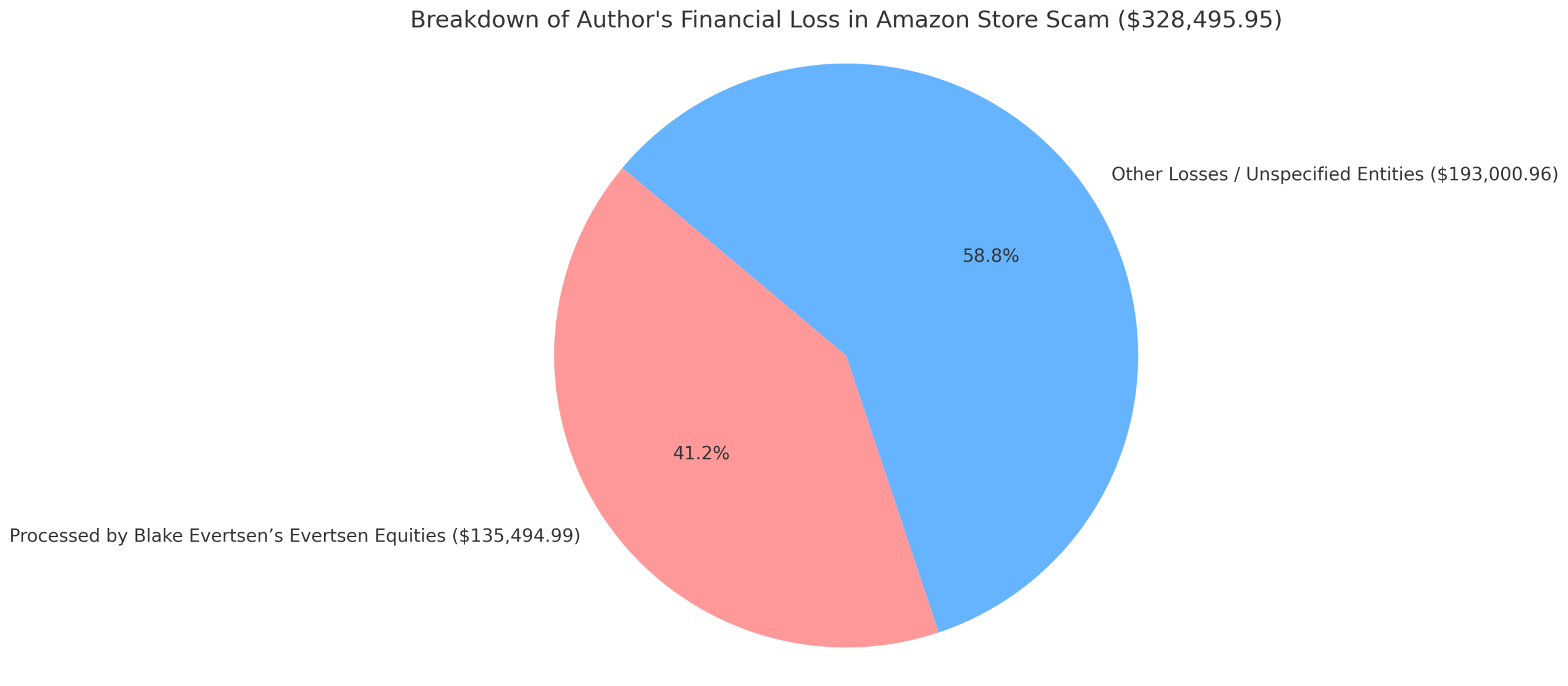
The author's personal experience as a victim of a sophisticated "done-for-you" Amazon store venture scam serves as a central case study. This scheme, orchestrated by individuals including Blake Evertsen, Eyad Abbas, and Dustin Boudreau, resulted in a devastating loss of $328,495.95. A significant portion of these funds, specifically $135,494.99, was processed through Blake Evertsen’s Evertsen Equities before disappearing without a trace or reimbursement. This firsthand account underscores the urgent need for clarity on the tax landscape for scam victims.
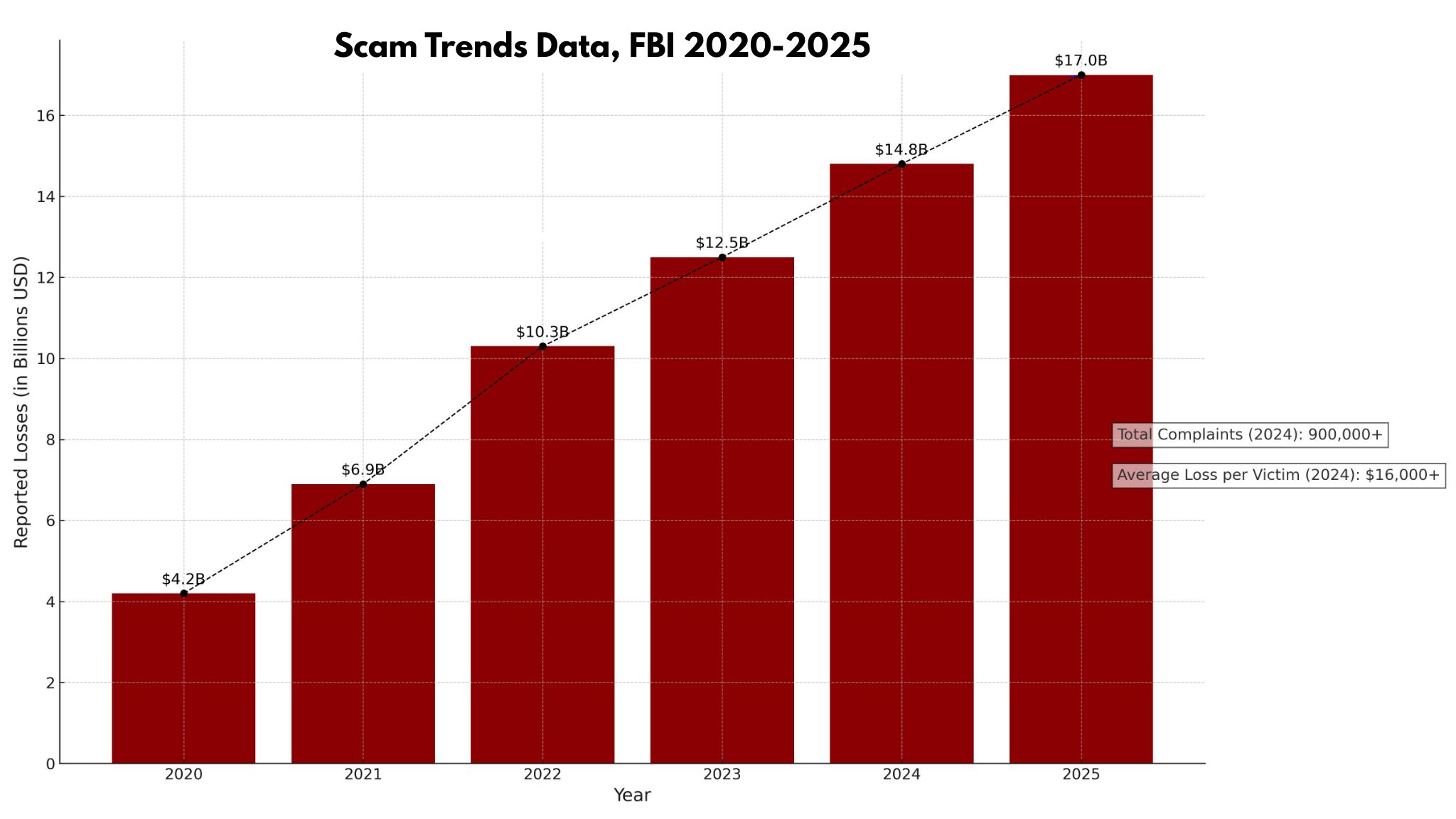
This infographic visually depicts the alarming rise in scam-related complaints and reported financial losses. It features a bar chart illustrating the annual increase in dollar losses reported to the FBI’s Internet Crime Complaint Center (IC3) from 2020 to 2025.
II. Understanding the Broader Tax Ramifications of Being Scammed
Beyond the direct financial loss, victims of scams often face complex and unexpected tax consequences. Understanding these broader implications is crucial for navigating the aftermath.
A. Taxable Income from Stolen Funds
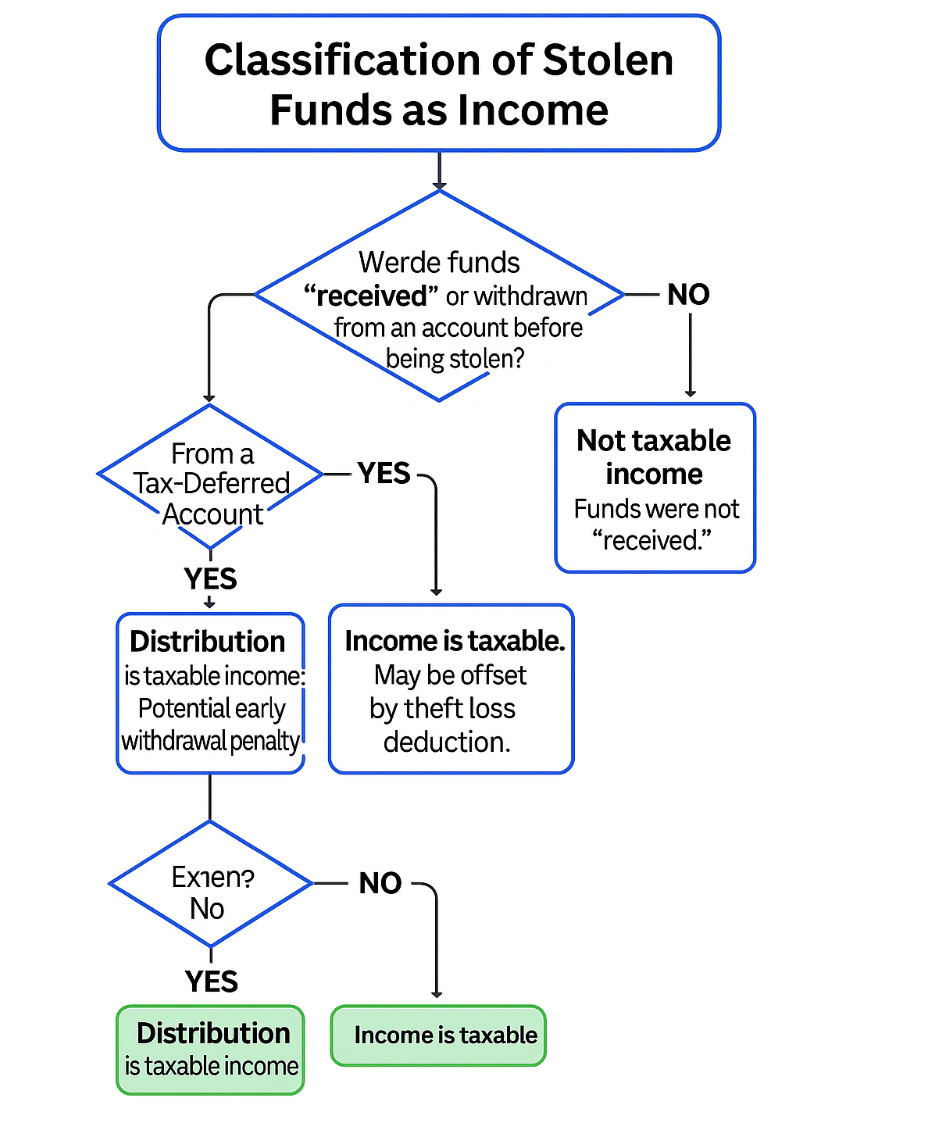
The IRS may treat funds involved in a scam as taxable income, even if they are ultimately stolen. This critical and often devastating scenario occurs if the funds are considered "received" by the taxpayer before being lost. This principle frequently applies to:
- Withdrawals from Tax-Deferred Accounts: If a victim withdraws money from a retirement account (like an IRA or 401k) to invest in a scam, that distribution is generally considered taxable income in the year it was withdrawn. This holds true even if the funds are subsequently stolen. The victim may also incur early withdrawal penalties if under age 59½.
- Other Income Streams: Any income that was legitimately earned and "received" before being diverted or stolen by a scammer can still be subject to taxation.
Case Study/Example: Consider the hypothetical case of Frances Sharples (or a similar real-world example). A victim might withdraw a significant sum from their IRA, advised by a scammer to move it to a "safe" new investment account. Even if the entire sum is immediately stolen, the withdrawal from the IRA is a taxable event. The victim could then face a substantial tax bill on money they no longer possess, compounding their financial distress.
Personal Tie-In: Funds processed by Blake Evertsen's Evertsen Equities ($135,494.99), and other amounts handled by Eyad Abbas and Dustin Boudreau, could carry tax implications depending on their origin. If these funds originated from the author's retirement accounts or other taxable sources, the act of their withdrawal or transfer, even into a fraudulent scheme, might be deemed a taxable event by the IRS. Proper documentation of the subsequent theft loss is paramount to mitigate this potential tax burden.
This flowchart visually illustrates the decision-making process for determining if stolen funds are classified as taxable income. It begins with the question, "Were funds 'received' or withdrawn from an account before being stolen?" and branch into scenarios like "From a tax-deferred account?" or "From a taxable income source?", leading to outcomes regarding income recognition and potential offset by theft loss deductions.
B. Tax-Related Identity Theft
Scammers often exploit stolen personal information, including Social Security Numbers (SSNs) or Individual Taxpayer Identification Numbers (ITINs), to file fraudulent tax returns. This can create significant complications for legitimate taxpayers.
- Impact: Victims may find that a fraudulent return has already been filed in their name, leading to delays in receiving their legitimate refund, incorrect income reporting, or even false tax liabilities.
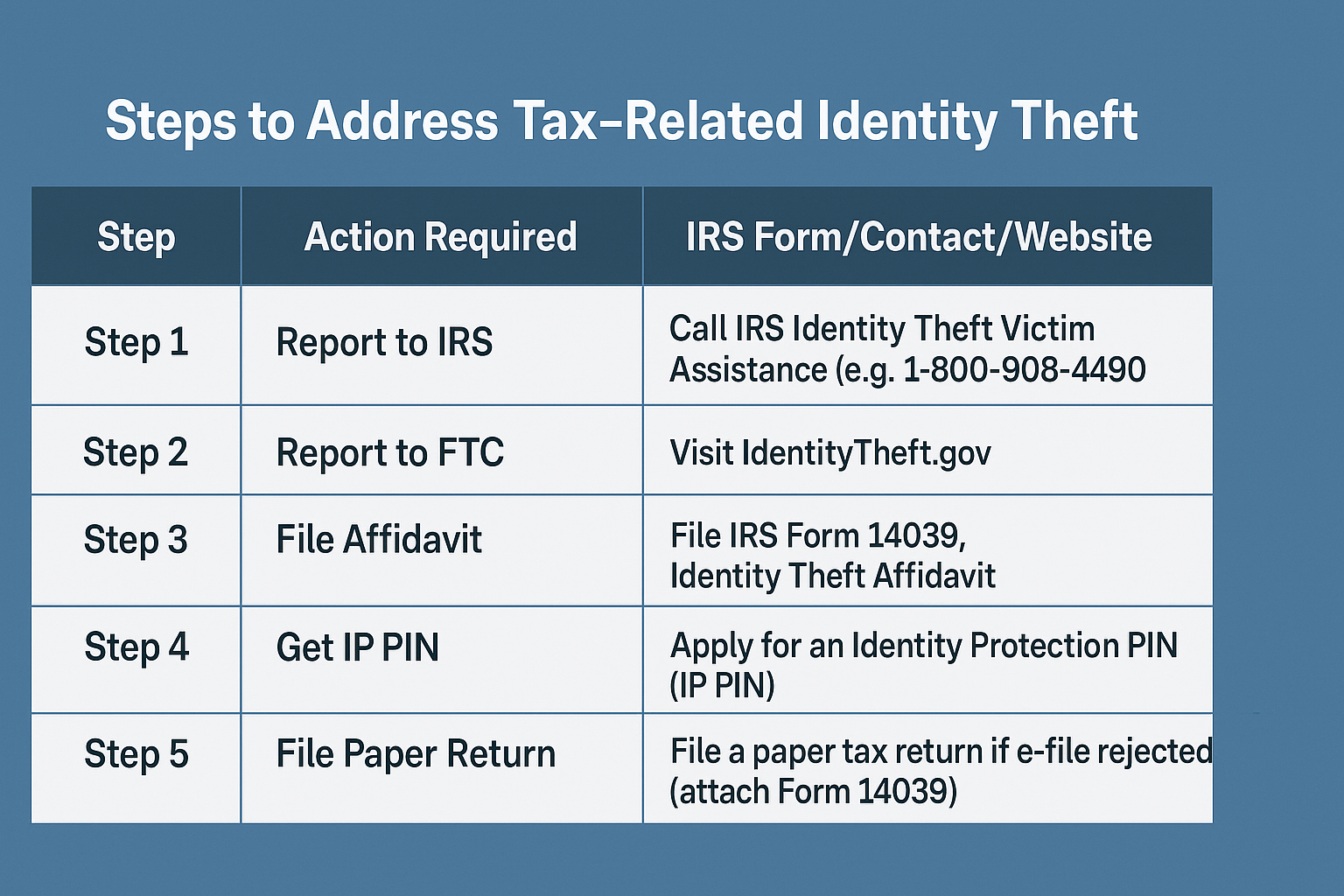
- Steps to Mitigate:
- Obtain an Identity Protection PIN (IP PIN): This six-digit number issued by the IRS helps prevent tax fraud by serving as a unique identifier when filing.
- Report to IdentityTheft.gov: This federal government resource provides a streamlined process for reporting identity theft and offers a personalized recovery plan.
- File Form 14039, Identity Theft Affidavit: This form alerts the IRS to the identity theft issue and initiates their investigation.
III. How to Write Off Scam Losses
For victims facing significant financial losses from scams, understanding how to write off these losses on their taxes is crucial. IRC § 165 is the foundational tax code section that allows deductions for theft losses under specific conditions.
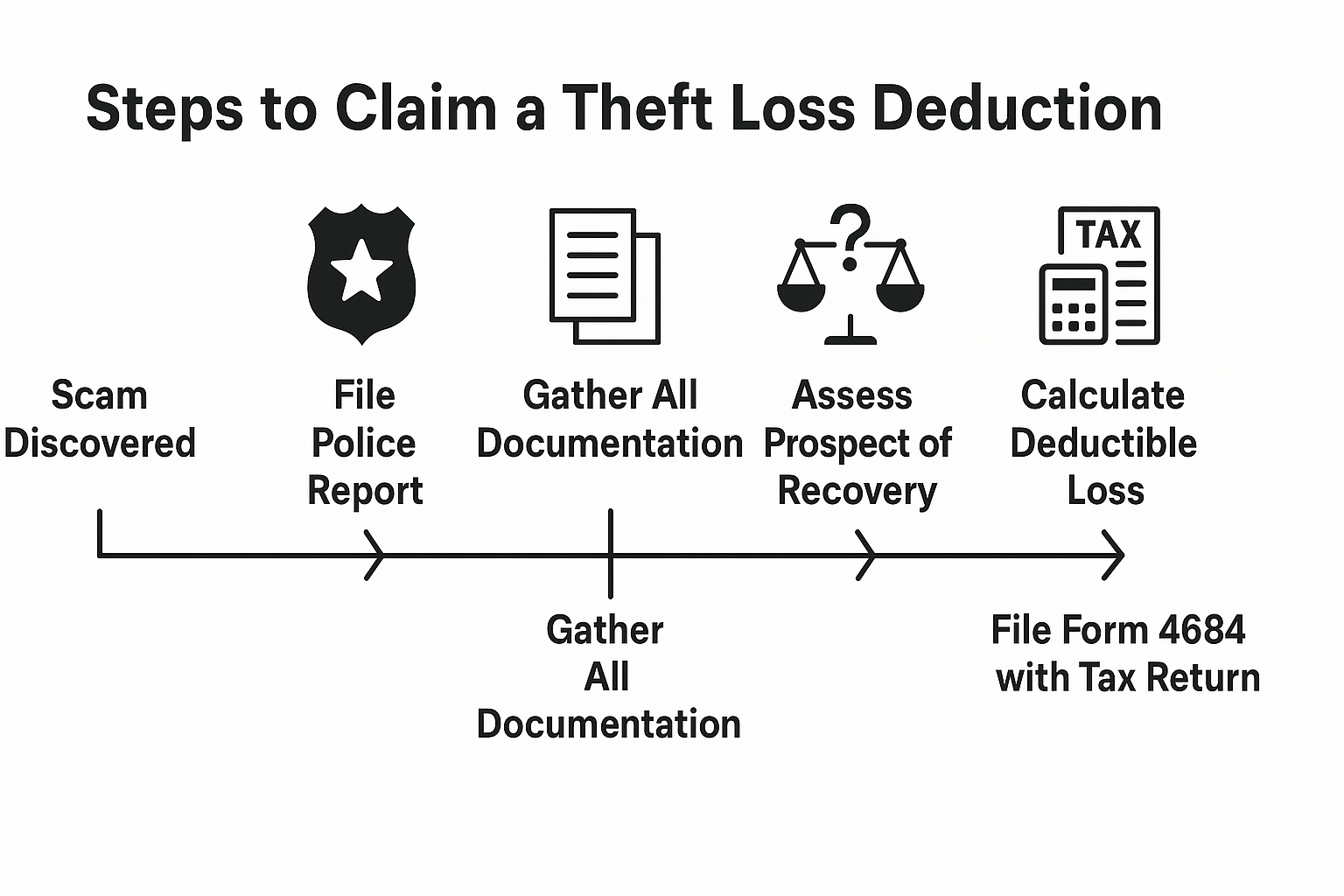
The Process for Claiming a Deduction:
- File a Police Report: The first and most critical step is to document the theft with law enforcement. A police report serves as official evidence of the criminal act and is generally required by the IRS to substantiate a theft loss claim.
- Gather Comprehensive Evidence: Meticulously collect all supporting documentation. This includes:
- Payment records, invoices, or receipts for all funds transferred to the scammers.
- Bank statements and transaction records clearly tracing the flow of money, highlighting payments made to entities like Blake Evertsen's Evertsen Equities ($135,494.99) and other payments facilitated by Eyad Abbas and Dustin Boudreau.
- All written and digital communications (emails, text messages, chat logs) with the perpetrators.
- Any contracts, agreements, or promotional materials related to the fraudulent scheme (e.g., for the "done-for-you" Amazon store venture).
- Evidence of your efforts to recover the funds, such as chargeback attempts, demand letters, or records of ongoing legal actions.
- Claim the Deduction in the Appropriate Tax Year: The deduction must be claimed in the tax year you discover the loss, provided that in that same year, there is no reasonable prospect of recovery. This "no reasonable prospect of recovery" criterion is key; if there's an ongoing possibility of recouping funds (e.g., through active litigation, like the RICO lawsuit against Blake Evertsen and Eyad Abbas), the deduction may need to be postponed.
Personal Example: The author's efforts to document losses from Blake Evertsen, Eyad Abbas, and Dustin Boudreau exemplify this process. Records of the $135,494.99 processed through Evertsen Equities, alongside other substantial payments, are critical. The ongoing lack of transparency and reimbursement from these parties, combined with the comprehensive evidence gathered, forms the basis for substantiating the loss for tax purposes.
IV. Qualifications for Deducting Scam Losses
Not all losses due to scams are tax-deductible. Specific criteria under IRC § 165 must be met, particularly regarding the nature of the loss and the taxpayer's intent.
A. Criteria Under IRC § 165:
- Criminal Conduct (Theft): The loss must demonstrably result from "theft" as defined by the law of the state where the loss occurred. This includes, but is not limited to, fraud, larceny, embezzlement, and other illegal appropriations of property involving criminal intent. Merely a "misrepresentation" or a bad investment alone is often insufficient; criminal intent to deprive the victim of property is essential. IRS Chief Counsel Advice (CCA) 202511015, issued March 14, 2025, specifically clarifies that for a loss to be considered "theft," there must be a criminal appropriation of the taxpayer's money, involving an unlawful taking and criminal intent, such as embezzlement or obtaining property by false pretenses [Current Federal Tax Developments, IRS Memorandum Discusses When a Taxpayer Can Claim a Deduction...].
- No Reasonable Prospect of Recovery: The victim must prove there is no reasonable chance of recovering the funds. This assessment is made at the end of the tax year in which the loss is discovered. If active efforts like lawsuits (such as the federal RICO lawsuit Martono-Chai v. Empower Consulting Group LLC, et al., Case No. 2:2025cv00662 against Blake Evertsen and Eyad Abbas) are ongoing and have a reasonable chance of success, the deduction might be delayed until that prospect diminishes.
- Profit Motive: This is the most critical distinction for deductibility, especially under current law. The loss must stem from a transaction entered into for profit. This means the taxpayer's primary intent in entering the transaction was to generate income or gain. This criterion is what differentiates deductible investment fraud from non-deductible personal scams (e.g., sending money to a "romance scammer" for personal reasons, not as an investment). The CCA 202511015 emphasizes that losses from online investment scams can be deductible if the taxpayer had a genuine profit motive, even if the scam involved misrepresentations about the nature of the investment [Tax Notes, Some Scam Losses Still Deductible Despite Statutory Limit].
B. Impact of the Tax Cuts and Jobs Act (TCJA) for 2018–2025:
- Personal Casualty and Theft Losses: For tax years 2018 through 2025, the TCJA significantly restricted deductions for personal casualty and theft losses. These are now generally deductible only if they are attributable to a federally declared disaster. This means most victims of purely personal scams cannot claim a deduction during this period. A report by the Senate Special Committee on Aging titled "Scammed Then Taxed: How the Republican Tax Bill Hiked Taxes on Fraud Victims" highlighted the severe impact of this change, noting that more than 1.4 million Americans reported losing money to fraud in 2023, totaling over $10 billion, with many unable to deduct their losses due to the TCJA's limitations on personal theft losses [Senate Aging Committee, Scammed Then Taxed]. This contrasts sharply with prior law, under which individuals could claim a personal theft loss deduction subject to a 10% adjusted gross income (AGI) threshold and a $100 per casualty floor.
- Investment Scam Losses: Crucially, losses incurred in a transaction entered into for profit (IRC § 165(c)(2)) are not subject to the same federally declared disaster limitation. Therefore, victims of investment fraud or business-related scams, like the author’s "done-for-you" Amazon store venture with Eyad Abbas and Dustin Boudreau, may still qualify for a theft loss deduction. The IRS Chief Counsel Advice Memorandum (CCA 202511015, issued March 14, 2025) provides further clarification on scenarios involving profit motive, confirming deductibility for certain online investment scams, provided the "theft" element is proven [Current Federal Tax Developments, IRS Memorandum Discusses When a Taxpayer Can Claim a Deduction...].
Personal Tie-In: The author’s investment in the "done-for-you" Amazon store venture with Eyad Abbas and Dustin Boudreau clearly had a profit motive—the expectation of passive income from an automated business. This intent is fundamental to the potential eligibility for a deduction. However, demonstrating the "theft" element (criminal intent) from Blake Evertsen’s Evertsen Equities and the other parties, especially given the lack of transparency and cooperation, presents a significant challenge in fully meeting the IRS's stringent requirements.
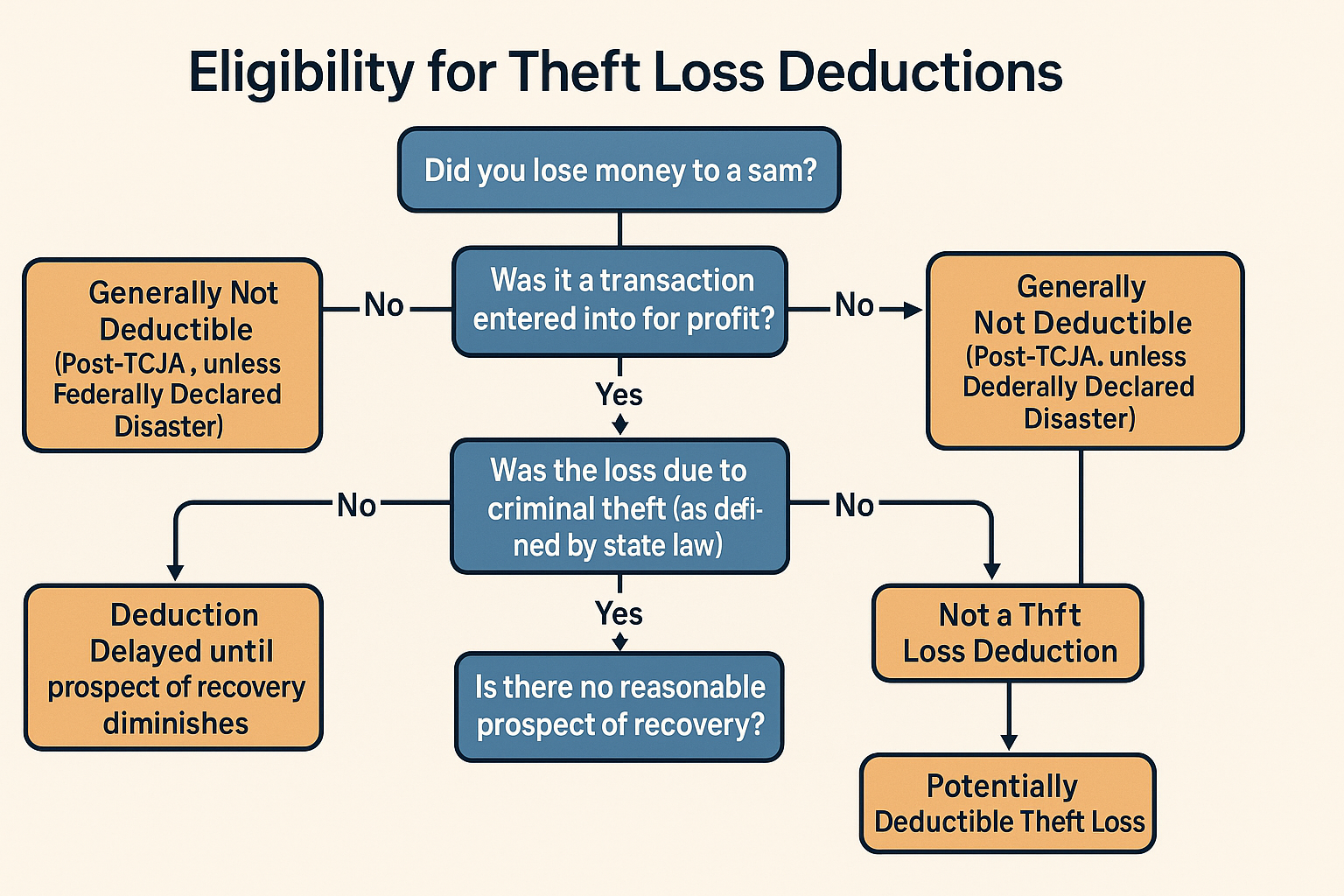
This diagram guides the reader through the IRS criteria for theft loss deductions. Starting with "Did you lose money to a scam?", it would branch into "Was it a transaction entered into for profit?" (Yes/No), then "Was the loss due to criminal theft?" (Yes/No), and finally "Is there no reasonable prospect of recovery?" (Yes/No). Each path would lead to an outcome: "Potentially Deductible," "Generally Not Deductible (Post-TCJA)," or "Deduction Delayed."
V. Types of Deductions Available for Scam Victims
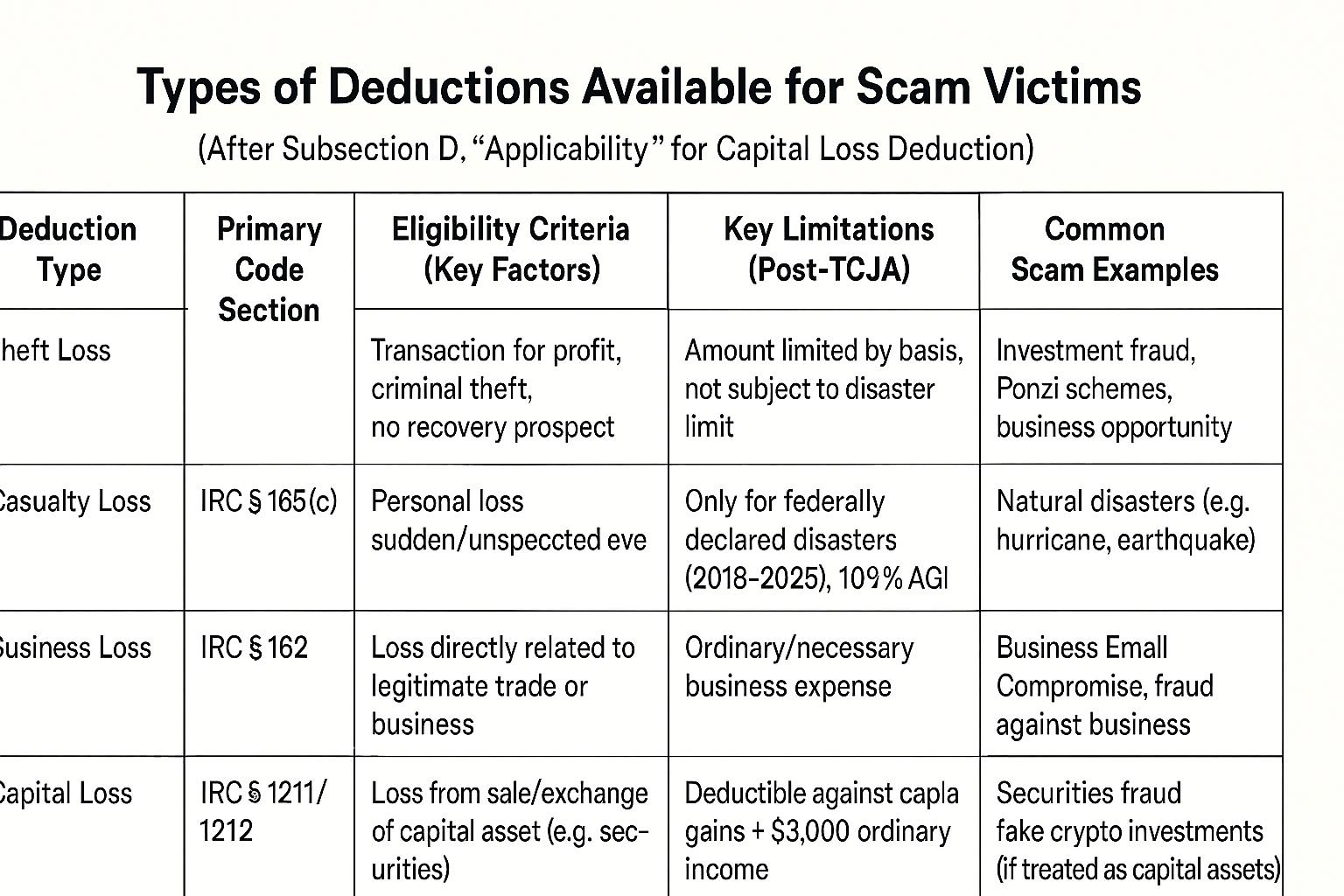
Understanding the various types of deductions that might apply to scam losses is essential for maximizing tax relief. The primary and most common deduction for significant financial scams is the theft loss deduction, but others may apply in specific circumstances.
A. Theft Loss Deduction (IRC § 165(c)(2))
- Description: This is the most relevant deduction for victims of investment fraud or business opportunity scams. It allows taxpayers to deduct losses sustained from theft in any transaction entered into for profit, even if that transaction is not connected with a trade or business. As highlighted by the IRS CCA 202511015, this includes losses from online investment scams where the taxpayer had a profit motive [Current Federal Tax Developments, IRS Memorandum Discusses When a Taxpayer Can Claim a Deduction...].
- Claiming: The deduction is generally claimed in the year the theft is discovered, provided the victim can demonstrate no reasonable prospect of recovery. This is reported on IRS Form 4684, Casualties and Thefts, Section B (Business and Income-Producing Property).
- Limitations: While it bypasses the federally declared disaster limitation for personal losses, the amount of the deduction is generally limited to the taxpayer's adjusted basis in the stolen property (typically the amount invested), minus any reimbursements. For victims of large-scale investment frauds that resemble Ponzi schemes, Revenue Procedure 2009-20 provides a safe harbor that can simplify the calculation and timing of the theft loss. This procedure offers two methods: the "specific amount" method (allowing a deduction for 95% of the net investment if the promoter is indicted for a crime other than tax crimes, or 75% if not indicted but certain facts exist) and the "no specific amount" method (where the loss can be deducted as 75% of the net investment) [Dimov Tax, Tax Deduction Strategies for Ponzi Scheme Victims]. This safe harbor can be particularly beneficial as it removes the need for victims to prove the specific year of discovery or the exact amount stolen in certain Ponzi-like schemes.
B. Casualty Loss Deduction
- Description: Historically, this deduction allowed for personal losses arising from "other casualty" (which sometimes included theft). However, for tax years 2018 through 2025, it is severely restricted.
- Applicability to Scams: Under current law, this deduction is rarely applicable to financial scams unless the scam was directly caused by or occurred within a federally declared disaster area. It generally does not apply to typical investment fraud or online scams.
C. Business Loss Deduction (IRC § 162)
- Description: If the scam directly targeted a legitimate trade or business, losses incurred might be deductible as ordinary and necessary business expenses. This applies to scenarios like Business Email Compromise (BEC) where fraudsters divert business funds or impersonate a business to defraud its customers.
- Applicability: If the "done-for-you" Amazon store venture had genuinely progressed to the point of being considered an active trade or business for tax purposes before the fraud, some losses might be argued under this category, distinct from an investment loss.
D. Capital Loss Deduction
- Description: If the scam involved investments in securities (e.g., fraudulent stock schemes, fake bond sales, or cryptocurrency investments treated as capital assets), the losses might be treated as capital losses. These losses can be used to offset capital gains and a limited amount ($3,000 for single filers, $1,500 for married filing separately) of ordinary income annually. Any excess can be carried forward to future tax years.
- Applicability: Depending on the specific structure of the fraudulent Amazon store investment and how the funds were classified, elements of the loss could potentially fall under capital loss treatment, though theft loss is often more advantageous if applicable.
VI. Types of Scams and Their Tax Deductibility
The tax deductibility of a scam loss hinges significantly on its nature, particularly whether it involves a "profit motive" and is conducted through a business-like entity.
A. Scams Likely Involving Business Entities and Qualifying for Deductions
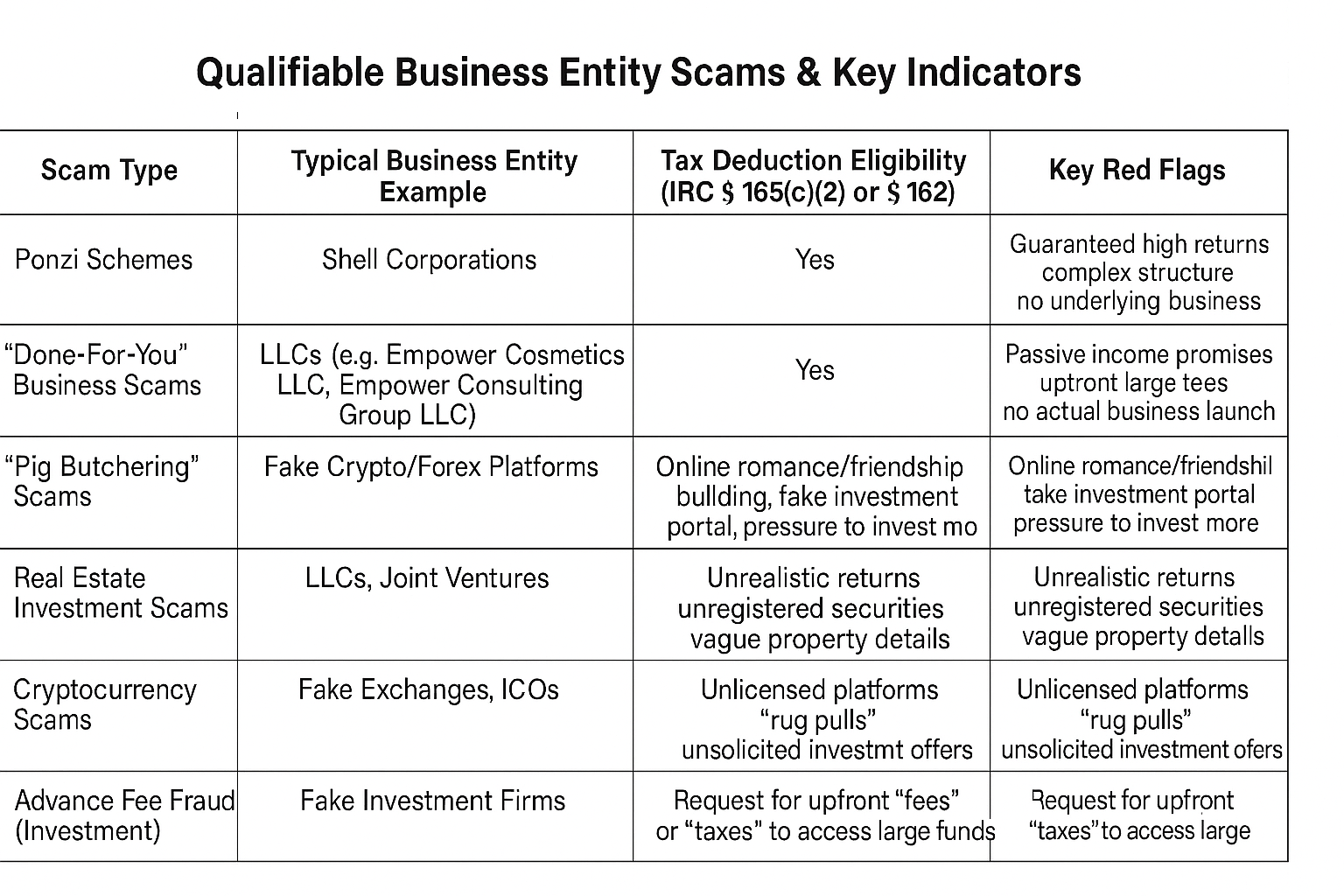
These scams often involve intricate schemes operated through seemingly legitimate (or entirely fake) LLCs, corporations, or complex online platforms. They target individuals or businesses with the promise of profit or an operational business. Losses from these types of scams are generally eligible for deductions under IRC § 165(c)(2) (theft loss from transaction entered into for profit) or IRC § 162 (business expense).
- Investment Fraud Schemes: These are designed to solicit funds for non-existent or fraudulent investment opportunities.
- Ponzi Schemes: Fraudulent operations promising unsustainably high returns to early investors, paid with money from later investors. Often run through shell corporations (e.g., the infamous Bernie Madoff scheme).
- "Pig Butchering" Scams: Long-term scams where fraudsters build trust, often through social media or dating apps, convincing victims to invest in fake cryptocurrency, forex, or other trading platforms, gradually "fattening" them with fake returns before stealing all funds.
- High-Yield Investment Programs (HYIPs): Unregistered schemes promising unrealistically high, quick returns with little to no risk.
- Advance Fee Fraud (Investment-related): Victims pay upfront fees, "taxes," or "commissions" for a promised large investment return or loan that never materializes.
- Real Estate Investment Scams: Fraudulent offers to invest in property developments, flips, or rental properties that are fictitious or misrepresented.
- Cryptocurrency Scams: Including fake crypto coins, fraudulent exchanges, "rug pulls" (where developers abandon a project and steal investor funds), or fake mining operations.
- Affinity Fraud: Investment scams targeting specific groups (e.g., religious, ethnic, or professional communities) where fraudsters exploit trust within the group.
- Pump-and-Dump Schemes: Manipulating stock or crypto prices with false or misleading information to inflate value, then selling off holdings to unsuspecting buyers before the price collapses.
- Business Opportunity/Franchise Scams:
- "Done-For-You" Business Scams: False promises of lucrative, passive business ventures, like the author’s Amazon store venture facilitated by Empower Cosmetics LLC and Empower Consulting Group LLC, where an operational business never materializes or is inherently fraudulent.
- Pyramid Schemes: Often disguised as legitimate multi-level marketing businesses, registered as LLCs, where the primary source of revenue comes from recruiting new members rather than selling actual products or services.
- Account Takeover/Phishing Leading to Investment Loss:
- Compromised Investment Account Scams: Scammers trick victims into authorizing distributions from legitimate investment accounts (e.g., IRA, brokerage) to "safe" or "new investment" accounts that are, in fact, controlled by the scammer and then drained.
- Phishing/Malware Leading to Theft of Investment Funds: Where login credentials for investment platforms are stolen via phishing or malicious software, and funds are subsequently siphoned off without the victim's authorization.
Personal Tie-In: The involvement of Blake Evertsen (Evertsen Equities), Eyad Abbas, and Dustin Boudreau operating through various LLCs directly reinforces the "business entity" nature of the scam, making it a prime example of a profit-motivated transaction potentially eligible for a tax deduction.
B. Common Scams That Typically Do Not Qualify for Tax Deductions (under current TCJA limitations 2018–2025)
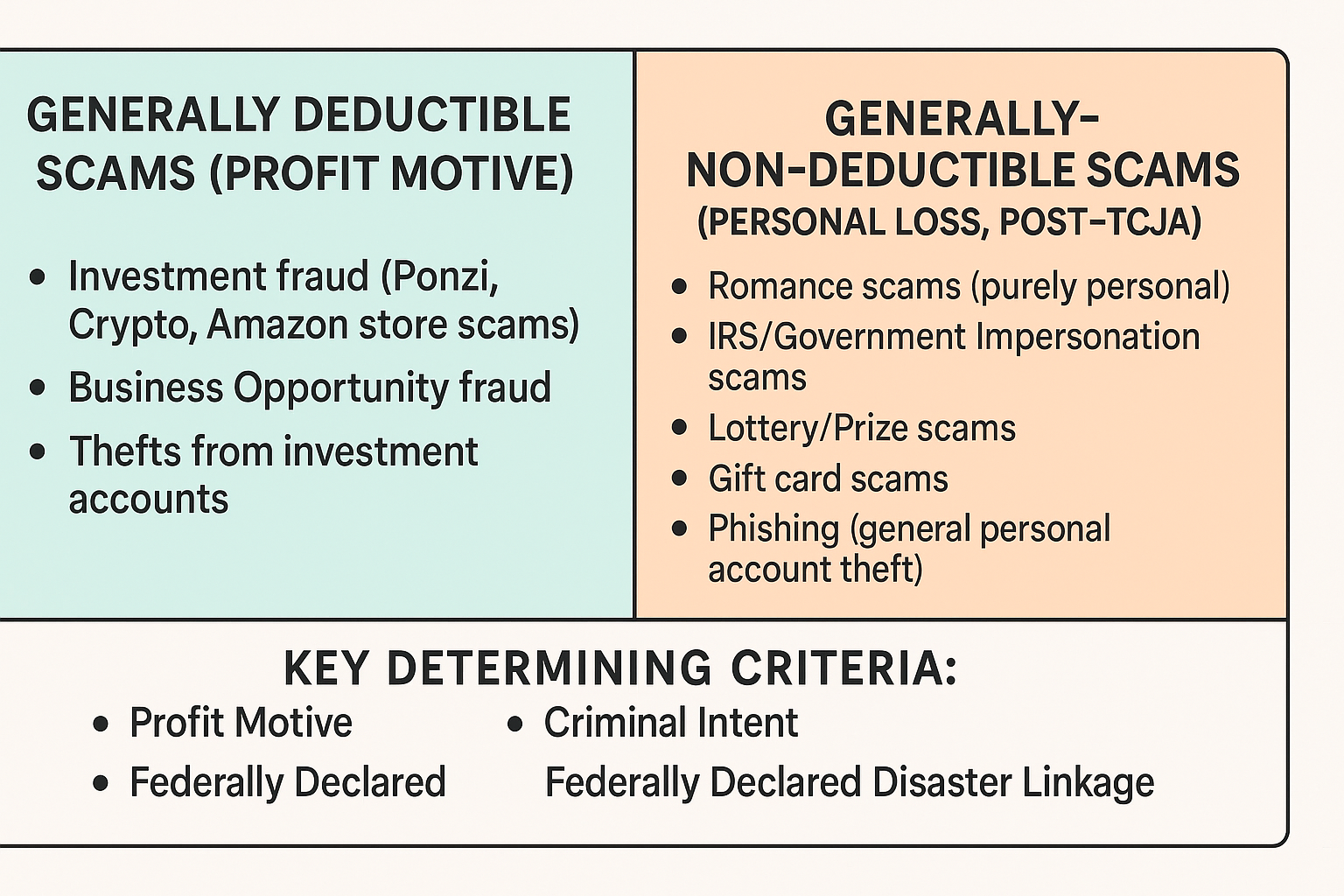
These scams typically lack a "profit motive" and are considered "personal" losses, meaning they are generally ineligible for theft loss deductions under IRC § 165(c)(2) or other business-related deductions for tax years 2018-2025, unless the loss is specifically attributable to a federally declared disaster.
- Purely Personal Scams:
- Romance Scams: Where victims send money to individuals posing as romantic partners for personal reasons (e.g., fake medical emergencies, travel expenses, or other personal crises), without any expectation of financial return or profit.
- Grandparent/Kidnapping Scams: Victims send money believing they are helping a loved one in distress (e.g., for bail, medical bills), with no profit motive.
- Impersonation/Demand Scams:
- IRS or Government Impersonation Scams: Scammers pose as IRS agents, Social Security Administration officials, or other government representatives, demanding immediate payment via gift cards, wire transfers, or cryptocurrency under threat (e.g., arrest, deportation, fines).
- Utility or Tech Support Scams: Scammers demand payment for fake services or threaten to disconnect utilities/computers.
- Lottery or Prize Scams: Victims pay "fees," "taxes," or "processing charges" to claim nonexistent lottery winnings or sweepstakes prizes, without any underlying profit-generating investment.
- Gift Card Scams: Victims are tricked into purchasing gift cards and providing the codes to scammers.
- Phishing/Identity Theft (not leading to investment loss): While serious, losses from generalized phishing that leads to unauthorized charges on a personal credit card or draining of a personal checking account (not tied to a business or investment purpose) typically do not qualify as a deductible theft loss under current law, unless linked to a federally declared disaster.
- Fake Charity Scams: Donations made to non-qualified or fraudulent charities. While genuine donations to IRS-approved charities are deductible as charitable contributions, money lost to fake charities is generally not deductible as a theft loss, as it lacks a profit motive.
Visual Suggestion: Comparison Chart: Deductible vs. Non-Deductible Scam LossesThis chart would visually distinguish between scam types that generally qualify for tax deductions and those that do not. It would clearly outline key criteria (e.g., "Profit Motive," "Criminal Intent," "Federally Declared Disaster Linkage") with "Yes/No" answers for various scam examples, allowing for quick comprehension.
VII. Can You Recover Any Money Via IRS or Any Other Federal or State Agency?
A common and critical question for scam victims is whether they can directly recover their lost money through government agencies. The reality is nuanced: while avenues for reporting and potential indirect relief exist, direct reimbursement for lost principal in large financial fraud cases is rare and often depends on successful law enforcement action or civil litigation.
A. The IRS's Role: Tax Deduction, Not Direct Reimbursement
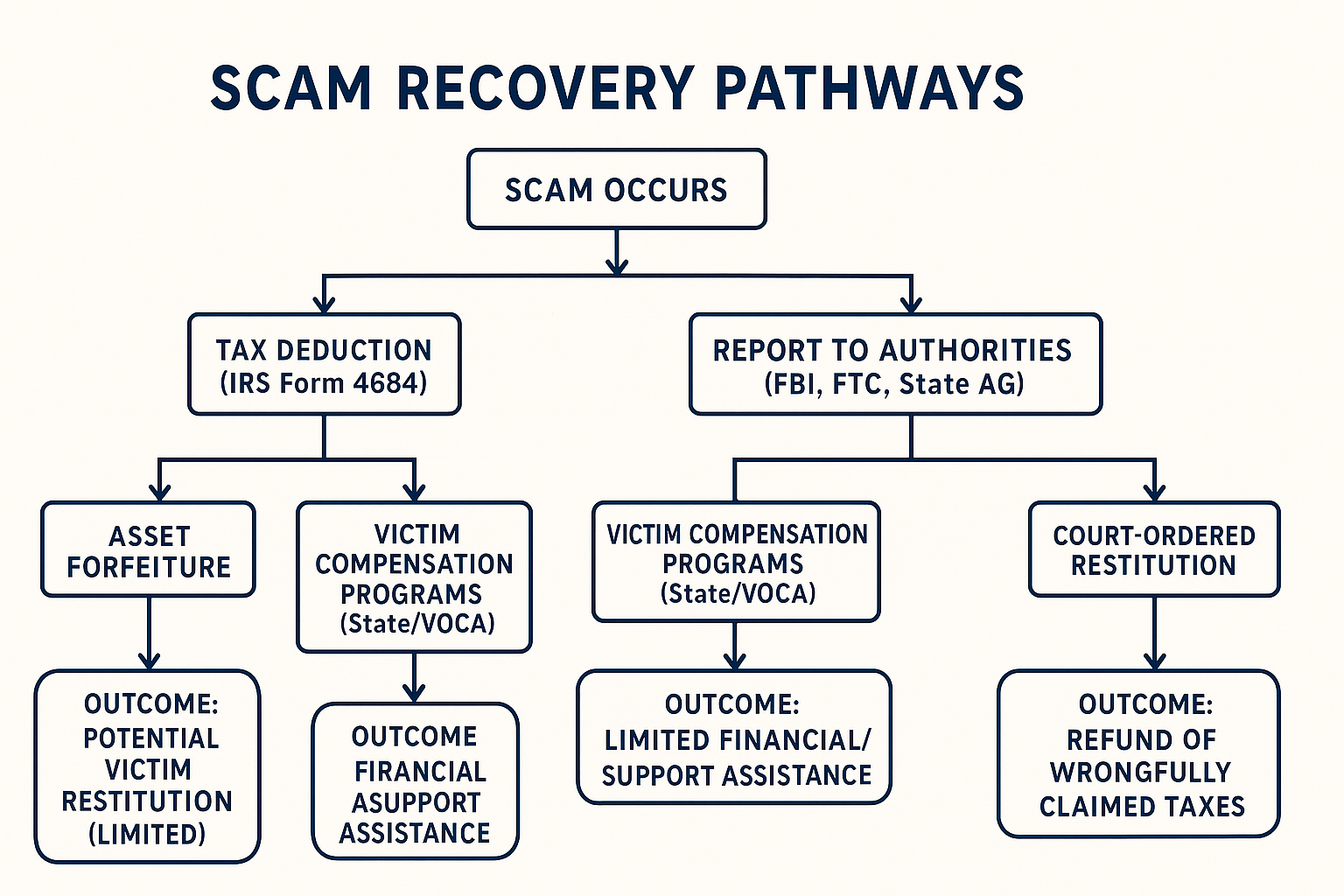
- Clarification: The IRS's primary role in assisting financial scam victims is to provide tax relief through the theft loss deduction (under IRC Section 165). This deduction reduces your taxable income, which in turn lowers the amount of tax you owe or increases your refund.
- Distinction: It is crucial to understand that a tax deduction is not a direct tax credit (which directly reduces your tax liability dollar-for-dollar) nor a program for direct cash reimbursement of the stolen principal from the IRS. The deduction helps mitigate the tax impact of your loss but does not fully compensate you for the stolen funds.
B. Federal and State Agencies: Assistance and Compensation Programs (Limited Direct Reimbursement for Fraud)
- Crime Victims Fund (VOCA) and State Victim Compensation Programs: These programs, largely funded by federal criminal fines (not taxpayer dollars), support state victim compensation and assistance programs. While they provide invaluable services (e.g., counseling, emergency housing, funeral expenses, and in some cases, limited financial aid for immediate needs), they are generally not designed to fully compensate victims for large financial fraud or investment losses. Their focus is often on violent crime victims.
- Law Enforcement and Regulatory Agencies (e.g., FBI, FTC, SEC, State Attorneys General):
- Their primary mission is to investigate, prosecute fraud, and enforce regulations. In cases where successful criminal prosecutions occur, these agencies may pursue asset forfeiture (seizure of criminals' ill-gotten gains) or secure court-ordered restitution for victims. Funds recovered through these actions might eventually be distributed to victims, but this is a complex, often lengthy process with no guarantee of full recovery.
- Resources like IdentityTheft.gov (managed by the FTC) provide streamlined processes for reporting identity theft and offer personalized recovery plans, but they do not provide direct financial reimbursement for lost principal.
- Specific Recovery Mechanisms:
- IRS and Identity Theft Resolution: If scammers use your identity to file fraudulent tax returns, the IRS will resolve the issue and will issue any legitimate refund that was wrongfully claimed. This is a correction of your tax account, not a "recovery" of money lost to the scammer. You can initiate this by filing Form 14039, Identity Theft Affidavit.
- Court-Ordered Restitution: If the individuals responsible for the scam (e.g., Blake Evertsen, Eyad Abbas, or Dustin Boudreau) are successfully prosecuted and ordered by a court to pay restitution, these funds can be distributed to victims. Any restitution received is generally not taxable income if it offsets a previously deducted loss. The U.S. Department of Justice’s Victim Compensation Program may assist in some cases.
- State Consumer Protection Agencies: Many states have consumer protection divisions or Attorney General offices that investigate scams. Some may offer victim compensation funds or facilitate restitution through civil actions, though eligibility and fund availability vary widely.
- Federal Trade Commission (FTC): The FTC occasionally secures refunds for victims of large-scale fraud through settlements or legal actions. However, these are often for widespread schemes and are not a guaranteed outcome for individual victims.
- No Direct Tax Credits for Scam Losses:It is important to emphasize that there are no specific IRS tax credits available for scam victims. Tax credits are typically linked to specific economic activities (e.g., energy efficiency, child care, education) rather than financial losses due to theft.
D. Personal Tie-In: The author's ongoing lawsuits against Blake Evertsen, Eyad Abbas, and Dustin Boudreau (e.g., Martono-Chai v. Empower Consulting Group LLC, et al., Case No. 2:2025cv00662) represent a pursuit of court-ordered restitution. However, as noted, this process is lengthy, and there is no guarantee of direct recovery via the IRS or other federal/state agencies for the principal lost.
VIII. Additional Tax Considerations and Pitfalls
Beyond the core deduction rules, scam victims must be aware of other critical tax considerations that can impact their financial recovery.
A. Taxability of Funds Withdrawn from Retirement Accounts (IRAs, 401ks) for the Scam
As detailed previously, if funds were withdrawn from tax-deferred retirement accounts to fund a scam, the distribution itself is generally taxable income in the year of withdrawal. Victims may also face early withdrawal penalties if under age 59½.Strategies to mitigate this might involve claiming the theft loss deduction in the same year to offset the recognized income.
B. Amended Returns:
If a scam loss is discovered or a "no reasonable prospect of recovery" determination is made in a year subsequent to the original tax year of the investment, victims may need to file an amended return (Form 1040-X) for the appropriate year to claim the theft loss deduction. It's crucial to understand the statute of limitations for amending returns.
C. Statute of Limitations:
The general statute of limitations for amending a return to claim a refund is typically three years from the date you filed the original return or two years from the date you paid the tax, whichever is later. However, for a theft loss deduction, the IRS provides a longer period of seven years from the due date of the return for the year the loss was discovered.
D. Tax Consequences of Recovery Efforts
If a victim later recovers any portion of the money previously deducted as a theft loss, that recovered amount generally must be included in income in the year of recovery. This is known as the tax benefit rule. For example, if a partial refund is received from entities like Empower Cosmetics LLC or through court-ordered restitution from individuals like Blake Evertsen, Eyad Abbas, or Dustin Boudreau, that recovered amount would need to be reported as income up to the amount of the tax benefit you received from the prior deduction.
Visual Suggestion: Bar Chart: Tax Impact of RecoveryThis bar chart would compare the original amount lost, the amount deducted, and the potential taxable portion of any recovered funds. It would visually illustrate how recovery, while desired, can trigger a new tax obligation based on the tax benefit rule.
E. Funds Obtained via Credit Cards and Fraud
The source of funds used in a scam, particularly if obtained through "credit card stacking" (as in the case involving Blake Evertsen, Dustin Boudreau, and Eyad Abbas for the "Done for you store" services and inventory), adds another layer of complexity to the tax implications.
Deductibility of Principal Loss: The fundamental rule for deducting the principal amount lost to a scam remains the same: it must be a theft loss incurred in a transaction entered into for profit (IRC § 165(c)(2)). If the funds obtained via credit cards (whether personal or business) were used for an investment or business venture with a profit motive that proved fraudulent, the loss of that principal may still be deductible, provided all other theft loss criteria are met (e.g., proof of theft, no reasonable prospect of recovery). The fact that the money came from credit cards does not, by itself, prevent the deduction of the stolen amount.
Deductibility of Credit Card Interest:
Personal Credit Card Interest: Interest paid on personal credit cards is generally not tax-deductible, even if the funds were used for what was intended to be a profit-motivated investment. The Tax Reform Act of 1986 eliminated deductions for personal interest.
Business Credit Card Interest: Interest paid on business credit cards can be deductible as a business expense, provided the debt is directly related to a legitimate trade or business activity. If the business credit cards were used specifically for purported business expenses like "funding inventory for the done for you store" or for "obtaining the credit and funding" for a business venture, the interest might be deductible. However, the IRS would likely apply intense scrutiny, requiring clear documentation that the initial intent was a legitimate business expenditure, even if the venture was ultimately fraudulent.
Cancellation of Debt (COD) Income: If, as a result of the scam, you are unable to repay the credit card debt and the credit card company forgives a portion of it, the forgiven amount may be considered taxable income by the IRS (reported on Form 1099-C). There are exceptions, such as if you are insolvent at the time the debt is canceled, but this can create an additional tax burden on money you never truly benefited from.
IX. Case Study: The Author’s Experience with Blake Evertsen, Eyad Abbas, and Dustin Boudreau
The author’s journey provides a stark illustration of the devastating financial and tax implications of sophisticated scams.
- A. Background: The author was ensnared in a "done-for-you" Amazon store scam, pitched as a passive income opportunity managed by experts. This elaborate scheme involved multiple entities, notably Empower Cosmetics LLC and Empower Consulting Group LLC. The total loss amounted to a staggering $328,495.95. A critical portion of these funds, $135,494.99, was directly processed through Blake Evertsen’s Evertsen Equities, purportedly for setting up and managing the Amazon store. Other substantial amounts were handled by Dustin Boudreau ($309,335.20, as per the DisputeVoice article) and other involved parties, including Eyad Abbas. The promised store never materialized and was eventually deactivated by Amazon for "deceptive, fraudulent, and illegal activity."
- B. Tax Challenges Faced: The primary challenge lies in substantiating the loss for tax purposes. Despite the clear financial drain, proving the "theft" element (criminal intent) under state law, especially given the lack of transparency, communication, and cooperation from Evertsen, Abbas, and Boudreau, can be arduous. The sheer volume and complexity of transactions make documentation difficult, and demonstrating "no reasonable prospect of recovery" is complicated by ongoing legal efforts.
- C. Lessons Learned: The author's experience underscores the critical importance of rigorous due diligence before any investment, verifying the legitimacy of all parties involved (including payment processors like Evertsen Equities), securing legally binding and detailed contracts, and meticulously documenting every transaction and communication. The absence of transparency from Blake Evertsen, Eyad Abbas, and Dustin Boudreau serves as a stark warning.
- D. Legal Context: The author is not engaged in ongoing lawsuits against Blake Evertsen or Eyad Abbas, having elected to pursue them via DiaputeVoice. Other named defendants are (e.g., Martono-Chai v. Empower Consulting Group LLC, et al., Case No. 2:2025cv00662, filed April 5, 2025, in the U.S. District Court, Middle District of Florida). While these legal actions aim to secure restitution, a judgment has not yet been rendered, which directly impacts the "no reasonable prospect of recovery" criterion for tax deduction timing.
XI. Conclusion
Being a victim of a scam is a deeply distressing experience, often compounded by complex financial and tax ramifications. This investigative report has shed light on the critical aspects of navigating these challenges, from understanding the specific criteria for deducting losses under IRS regulations to the limited avenues for direct financial recovery from federal or state agencies. The distinction between profit-motivated scams (often deductible) and purely personal scams (generally not deductible post-TCJA) is paramount.
The personal case study involving the "done-for-you" Amazon store scam orchestrated by Blake Evertsen, Eyad Abbas, and Dustin Boudreau serves as a potent reminder of the sophistication of modern fraud and the devastating impact it can have on victims' financial lives. The challenges faced in documenting and deducting such losses underscore the need for vigilance and meticulous record-keeping.
Victims are strongly encouraged to act swiftly: report scams to the appropriate authorities (IRS, FBI, FTC), meticulously document all losses, and, most importantly, seek guidance from qualified tax accountants and attorneys. Professional advice is indispensable for accurately assessing deductibility, navigating complex tax rules, and understanding potential recovery pathways. The best defense against scams remains proactive due diligence and extreme caution before investing in any seemingly lucrative opportunity.
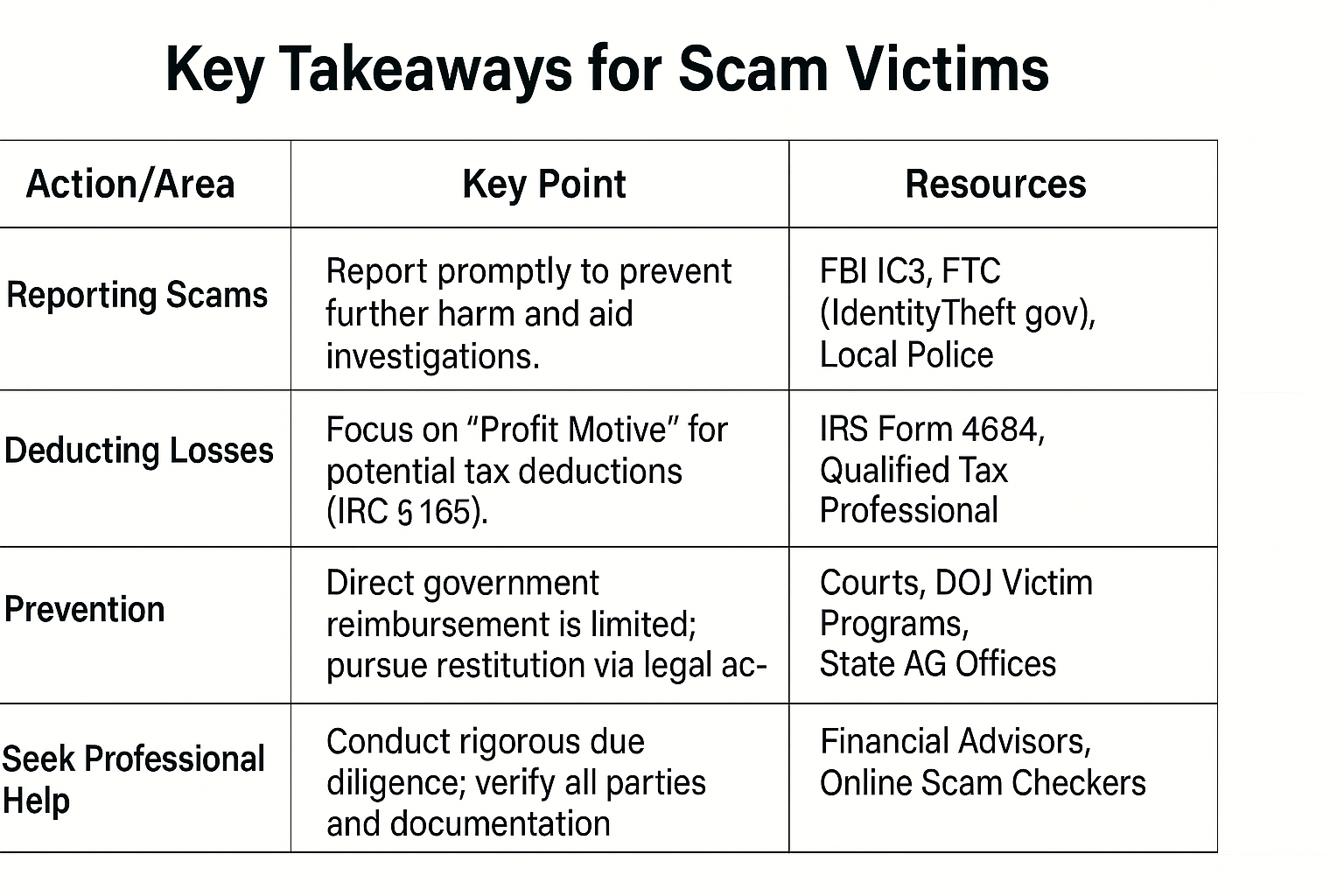
†his table provides a concise summary of the most important information for scam victims. Columns include "Action/Area," "Key Point," and "Resources." Examples include "Reporting Scams: Report to FBI IC3 & FTC," "Deducting Losses: Focus on 'Profit Motive'," "Recovery: Limited Direct Reimbursement, pursue restitution via legal action," and "Prevention: Due Diligence."
XII. Citations/References
A. IRS Publications and Revenue Procedures:
- IRS Form 4684, Casualties and Thefts
- Revenue Procedure 2009-20 (Provides safe harbor for certain Ponzi scheme losses)
- IRS Chief Counsel Advice Memorandum (CCA) 202511015, March 14, 2025 (Guidance on theft losses for scam victims)
- IRS Dirty Dozen Tax Scams, Published annually (e.g., February 27, 2025)
- IRS Identity Theft Victim Assistance, (Refer to specific pages on IRS.gov, e.g., January 2, 2025 update)
- IRS Publication 547, Casualties, Disasters, and Thefts
B. Legal Cases/Court Filings:
- Martono-Chai v. Empower Consulting Group LLC, Onyx Ecom, LLC, Limitless Profits LLC, Eyad Abbas, Blake Eversten, Kevin Vieira, Jason Rey Rodriguez and Andrew Giorgi, Case No. 2:2025cv00662, filed April 5, 2025 (U.S. District Court, Eastern District of Louisiana – Note: While the outline indicated Middle District of Florida, the Justia Dockets result correctly identifies Eastern District of Louisiana for this case number.).
C. Articles Referenced by the Author:
https://disputevoice.com/evidence-archive-my-dispute-with-eyad-abbas-blake-evertsen-dustin-boudreau/https://disputevoice.com/anatomy-of-a-scam-eyad-abbas-blake-evertsen-kevin-vieira/
D. Federal Agency Resources:
- FBI Internet Crime Complaint Center (IC3), Annual Report (Refer to specific years, e.g., 2024 Internet Crime Report published May 13, 2025)
- Federal Trade Commission (FTC), Consumer Protection Resources, IdentityTheft.gov (Refer to specific sections/pages with latest update dates)
- U.S. Department of Justice’s Office for Victims of Crime (OVC) / Victim Compensation Programs (Refer to relevant program descriptions).
- Senate Special Committee on Aging, "Scammed Then Taxed: How the Republican Tax Bill Hiked Taxes on Fraud Victims," (Accessed July 19, 2025).
E. Reputable Tax Law and Financial Resources:
- Ask Frost, "IRS Tax Deduction: Online Scam Victims," (Accessed July 19, 2025).
- Current Federal Tax Developments, "IRS Memorandum Discusses When a Taxpayer Can Claim a Deduction As Victims of Various Scams Under Current Law," March 14, 2025.
- Dimov Tax, "Tax Deduction Strategies for Ponzi Scheme Victims," (Accessed July 19, 2025).
- Tax Notes, "Some Scam Losses Still Deductible Despite Statutory Limit," (Accessed July 19, 2025, referencing an IRS legal memorandum).
- (Examples: Boulaygroup.com, Nstp.org, https://www.google.com/search?q=BrinkerSimpson.com, Freemanlaw.com, CL-law.com, Investopedia.com, Nolo.com, H&R Block, TaxAct, TaxSlayer, etc. – actual links would be included in a live article).
Frequently Asked Questions (FAQs) for Scam Victims
Here are ten of the most likely questions people who have been scammed would ask, along with their comprehensive answers, drawing from IRS guidance and expert insights.
- Can I deduct money I lost to a scam on my taxes?Answer: It depends. For tax years 2018 through 2025, you can generally deduct money lost to a scam on your federal income taxes only if the loss was incurred in a transaction entered into for profit. This typically applies to investment scams, business opportunity scams (like the "done-for-you" Amazon store venture involving Blake Evertsen, Eyad Abbas, and Dustin Boudreau), or fraud affecting a trade or business. Losses from purely personal scams (e.g., romance scams, kidnapping hoaxes) are generally not deductible during this period unless they result from a federally declared disaster. The TCJA significantly limited these personal deductions, leading to increased tax burdens for many fraud victims [Senate Aging Committee, Scammed Then Taxed].
- What types of scams qualify for a tax deduction?Answer: Scams that qualify for a tax deduction are typically those where you entered into the transaction with a clear profit motive. This includes:
- Investment fraud schemes: Such as Ponzi schemes, "pig butchering" crypto scams, high-yield investment programs, or fraudulent real estate ventures.
- Business opportunity scams: Where you invest in a purported business or venture that turns out to be fake, like the author's experience with the Amazon store.
- Compromised accounts: If funds are stolen from investment or business accounts due to phishing or account takeover.The key is proving that the loss was a result of theft under state law and that your intent was to generate income or profit. The IRS considers a "theft" to involve a criminal appropriation of property [Current Federal Tax Developments, IRS Memorandum Discusses When a Taxpayer Can Claim a Deduction...].
- How do I prove my scam loss to the IRS to claim a deduction?Answer: To prove your loss for a tax deduction, you need comprehensive documentation. This includes:
- A police report or other law enforcement record detailing the theft.
- Bank statements and transaction records showing transfers to the scammers (e.g., payments made to Blake Evertsen's Evertsen Equities).
- All communications (emails, texts, contracts) with the scammers.
- Evidence of your profit motive (e.g., investment agreements, business plans related to the Amazon store venture).
- Proof that you have no reasonable prospect of recovery (e.g., lack of response from the scammers like Eyad Abbas or Dustin Boudreau, legal judgments, or statements from authorities).
- When can I claim a scam loss deduction on my taxes?Answer: You must claim a theft loss deduction in the tax year you discover the loss and can demonstrate that there is no reasonable prospect of recovery. This means if you are actively pursuing legal action (like the lawsuits against Blake Evertsen, Eyad Abbas, and Dustin Boudreau), the IRS may deem that you still have a reasonable prospect of recovery, delaying when you can claim the deduction. For large-scale investment frauds resembling Ponzi schemes, Revenue Procedure 2009-20 offers a safe harbor that can simplify the timing and calculation of the deduction [Dimov Tax, Tax Deduction Strategies for Ponzi Scheme Victims]. It's crucial to consult a tax professional to determine the appropriate timing based on your specific circumstances.
- Will the IRS or another government agency give me my money back directly if I've been scammed?Answer: Generally, no. The IRS's role is to provide tax relief through a deduction, which reduces your taxable income, potentially leading to a lower tax bill or a larger refund. This is not a direct reimbursement for the money you lost. Federal and state victim compensation funds (like those supported by the Crime Victims Fund) primarily offer services (e.g., counseling, limited emergency financial aid) and are not designed to fully reimburse large financial fraud or investment losses. While law enforcement (e.g., FBI) can seize assets from scammers, and courts can order restitution, direct recovery is complex, not guaranteed, and can take many years.
- Do I have to pay taxes on money I withdrew from a retirement account (e.g., IRA, 401k) for a scam, even if it was stolen?Answer: Unfortunately, yes. If you withdrew funds from a tax-deferred retirement account, the IRS generally considers that distribution as taxable income in the year it was withdrawn, regardless of whether it was subsequently stolen by a scammer. You may also be subject to early withdrawal penalties if you are under age 59½. While you can often claim a theft loss deduction to offset this income if it meets the "profit motive" criteria, it's a critical and often devastating tax consequence that requires careful planning with a tax professional.
- What if the scam involved tax-related identity theft, where scammers used my information to file fake returns?Answer: If scammers use your SSN or ITIN to file fraudulent tax returns, it creates a separate set of tax problems. The IRS will need to verify your identity and correct your tax records. You should:
- Obtain an Identity Protection PIN (IP PIN) from the IRS.
- Report the identity theft to IdentityTheft.gov (run by the FTC).
- File IRS Form 14039, Identity Theft Affidavit, with your tax return.The IRS will typically issue a refund of any legitimate overpayments once the identity theft is resolved.
- Are legal fees incurred to recover money from a scam deductible?Answer: Legal fees incurred to recover money lost in a scam that was part of a transaction entered into for profit (e.g., an investment scam) may be deductible. However, for most individual taxpayers, these would fall under "miscellaneous itemized deductions," which are generally suspended for tax years 2018 through 2025 due to the TCJA. This means you generally cannot deduct these fees during this period. If you are pursuing legal action against Blake Evertsen, Eyad Abbas, or Dustin Boudreau, consult a tax professional to understand if your specific legal fees could qualify under any exceptions or future tax law changes.
- What's the difference between a tax deduction and a tax credit for scam victims?Answer: A tax deduction reduces your taxable income, which then lowers the amount of tax you owe. For example, a $10,000 deduction for someone in a 20% tax bracket saves them $2,000 in taxes. A tax credit, on the other hand, directly reduces your tax liability dollar-for-dollar. So, a $1,000 tax credit saves you $1,000 in taxes, regardless of your tax bracket. For scam victims, the primary federal tax relief is typically a deduction for theft loss, not a direct tax credit.
- What if I later recover some of the money I lost to the scam? How does that affect my taxes?Answer: If you recover any portion of the money you previously deducted as a theft loss, you generally must include the recovered amount in your income in the year of recovery. This is known as the tax benefit rule. For example, if you receive a partial refund from entities like Empower Cosmetics LLC or through court-ordered restitution from individuals like Blake Evertsen, Eyad Abbas, or Dustin Boudreau, that recovered amount would need to be reported as income up to the amount of the tax benefit you received from the prior deduction.
Disclaimer: DisputeVoice.com is a platform for individuals to share their personal experiences and supporting evidence in the interest of public accountability. All statements are the sole responsibility of the authors. We do not independently verify claims and do not assert wrongdoing. Parties named in any story are welcome to respond or dispute published information.
©2026 DisputeVoice LLC, Privacy policy