
Free Florida-Specific Roofing Contract Risk Screening
I DON'T KNOW IF I CAN GET OUT OF THIS ROOFING CONTRACT
THIS TOOL TELLS YOU — FREE, IN 2 MINUTES
Most Florida homeowners don't realize they may still have the right to cancel, renegotiate, or push back — even after signing. This free screening analyzes your specific situation and tells you where you stand.
No emails. No salesmen. No phone calls.
 Time-sensitive: If you signed in the last 3–10 days, you may still have the legal right to cancel. This screening calculates your exact deadline — down to the day. Every hour matters.
Takes about 2 minutes. Results are instant and personalized. No salespeople will call.

Free. Personalized. Built from real Florida disputes.
How the Roofing Contract Cancellation Screening Works
Answer a Few Questions
When you signed, how you connected with the contractor, what's been paid. Just tap — no typing required.
We Check Your Exit Options
Your answers are analyzed against Florida cancellation law, permit standards, and common contract violations that create leverage.
See Where You Stand
Your personalized screening tells you whether you can cancel, what leverage you have, and what's at risk if you wait.
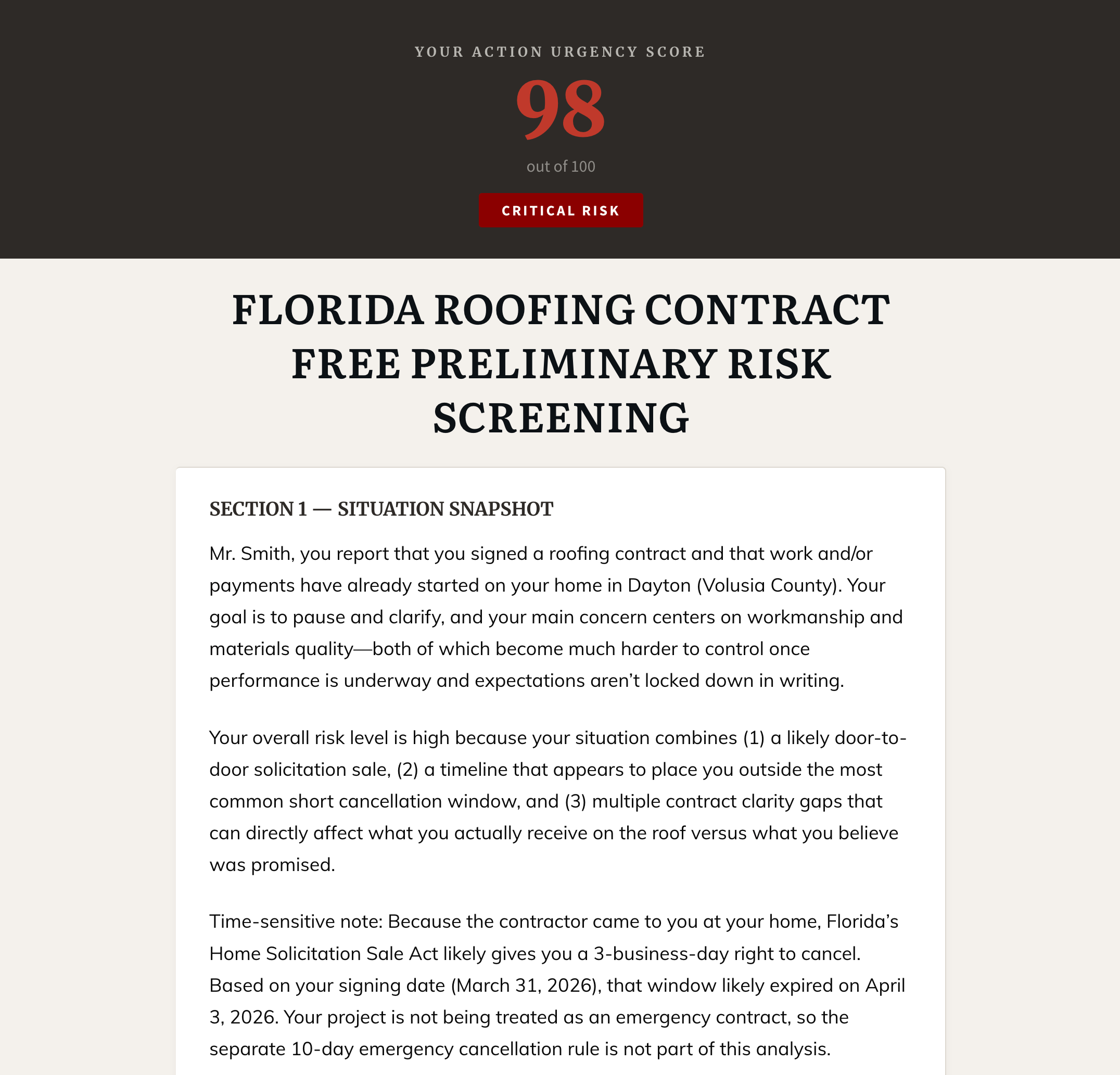
Here's What Your Screening Looks Like
Every report is personalized to your Florida county, your contract status, and your specific answers.
Watch: How the Florida Roofing Contract Cancellation Screening Works
2-minute overview of what the screening checks and how to use your results.
What the Free Screening Checks

Calculates whether your 3-day or 10-day cancellation window is still open under Florida's Home Solicitation Sale Act or Florida Statute § 489.147(6) — down to the exact day.
Even if the cancellation window has closed, permit violations, scope ambiguity, undisclosed subcontractors, and verbal-only promises can give you grounds to renegotiate or exit.
Evaluates your deposit, payment structure, and financing to determine how much leverage you've already given away — and what you can still protect.
Identifies who is responsible for pulling the roofing permit in your county — and flags it if the liability has been shifted to you.
A 0–100 urgency score tells you whether you have days, weeks, or months — and what happens if you wait.
If you signed a contingency agreement tied to an insurance claim, or a roofer wants you to sign over your insurance check, this screening identifies your exposure and whether the agreement is one you can exit.
Find Out If You Can Get Out — Free
2 minutes. Personalized to your county, your contract, and your situation. No payment required.
Check Your Exit Options →No email list. No sales calls. Just your report.
Why Florida Homeowners Feel Trapped in Roofing Contracts
Every year, thousands of Florida homeowners sign roofing contracts and almost immediately regret it. The combination of high-pressure sales tactics, confusing cancellation clauses, large upfront deposits, and tight legal deadlines creates a situation where people feel locked in before they've had time to think. The patterns below are drawn from real disputes documented in DisputeVoice Lighthouse Reports and reflect what we see across dozens of Florida counties.
Florida gives you 3 business days (or 10 days after a hurricane declaration) to cancel certain roofing contracts. Most homeowners don't learn this right exists until the window has already closed. That's why the first thing this screening checks is whether your window is still open.
Many roofing contracts include 15–25% cancellation penalties. But if the contractor violated the Home Solicitation Sale Act by not disclosing your right to cancel, or if no work has been performed, those penalties may have no legal teeth. The key is knowing which situation applies to you.
Missing permits, undisclosed subcontractors, vague scope of work, and verbal-only promises are all potential contract violations. When the contractor has broken the agreement first, your position to cancel, renegotiate, or pursue a mutual release gets significantly stronger.
Once a significant portion of the contract price is paid upfront, it becomes much harder to push back, pause the job, or negotiate an exit. Florida does not require contractors to hold deposits in escrow — meaning your money may already be spent.
Whatever the roofing salesperson said about materials, timeline, or warranty means nothing unless it's written in the contract. If it's not on paper, it doesn't exist in a dispute — and it won't help you get out.
Many Florida roofing companies subcontract the actual labor to crews you never vetted. If the sub has no contract with you, no insurance, and isn't registered with the state, this is a red flag — and potentially a leverage point in your favor.
After a storm, contractors often show up at your door and ask you to sign a contingency agreement that ties you to them for your insurance claim. These agreements can include 15–25% cancellation penalties — but they may not be enforceable if no work has been performed. If you signed one and want out, your options may be better than you think.
Some contractors pressure homeowners into signing a Direct Payment Authorization that lets the insurance company pay the contractor directly — before any work is done. Your insurance claim is yours. You are never obligated to hand over your insurance proceeds to a contractor before the work is completed and inspected.
Your tool has already proven valuable in slowing down my decision-making and reinforcing proper due diligence.
It prompted me to pause, ask the right questions, and identify risks before they escalated into legal and financial exposure.
Edna Fordham
Daytona Beach, FL — Volusia County
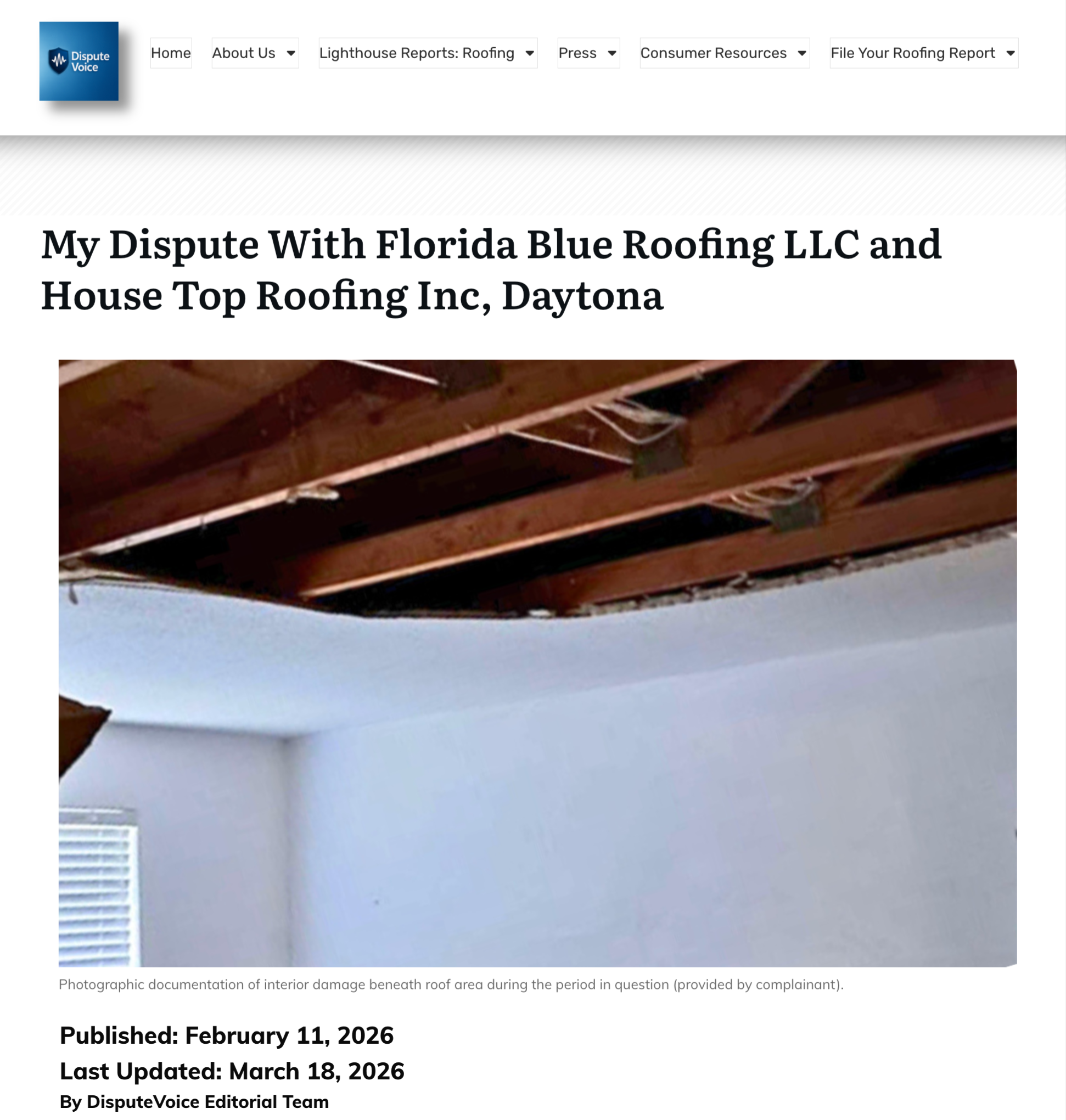
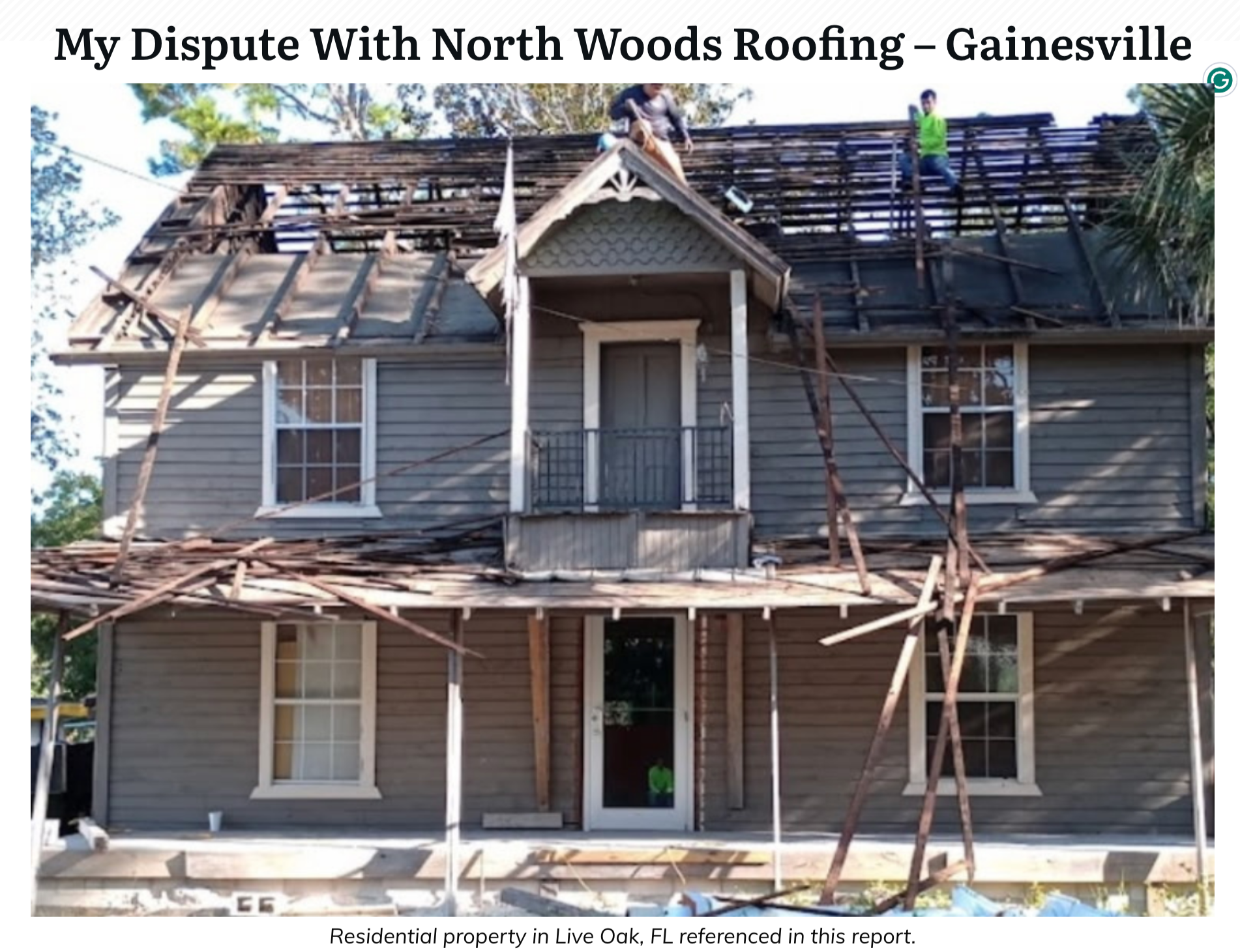
Real Florida Homeowners Who Wanted Out
Published case studies from our Lighthouse Reports
Your Rights When You Want to Cancel a Roofing Contract in Florida
Whether you can cancel your roofing contract — and how — depends on a combination of Florida statutes, how the sale happened, when you signed, and what the contract itself says. Here's what you need to know.
The 3-Day Cancellation Right (Home Solicitation Sale Act)
Under Florida's Home Solicitation Sale Act, homeowners who sign a roofing contract at their residence — when the contractor initiated the contact — generally have 3 business days to cancel without penalty. This applies to door-to-door sales, unsolicited phone calls, and contractor-initiated visits. It does not apply if you called the contractor first or visited their office. The cancellation must be delivered in writing within the 3-business-day window. Many contractors fail to disclose this right — which can extend your cancellation options.
The 10-Day Emergency Cancellation (Florida Statute § 489.147)
Effective July 1, 2024, Florida Statute § 489.147(6) provides a 10-calendar-day cancellation window for roofing contracts signed during or within 180 days of a Governor-declared state of emergency. The cancellation must be sent by certified mail to the contractor's address listed in the contract. This window closes early if materials installation has begun, a final permit has been issued, or a temporary code-compliant repair has been made. This law was enacted specifically to protect homeowners from contractors who pressure-signed contracts after hurricanes and then collected cancellation fees instead of doing work.
What If the Cancellation Window Has Closed?
Even after the statutory cancellation period expires, you may still have options. If the contractor has failed to pull permits, used undisclosed subcontractors, changed the scope of work without written authorization, or failed to deliver on written terms, these are potential contract violations. When the contractor has breached the agreement first, your grounds for termination, renegotiation, or mutual release become significantly stronger. The key is identifying which violations exist in your specific situation — which is exactly what this screening tool does.
Roofing Permit Issues as Exit Leverage
Florida law requires a building permit for most roofing projects, and the licensed roofing contractor is typically responsible for pulling it. If your contractor has asked you to pull the permit in your name, has started work without a permit, or cannot verify permit status — these are serious red flags that may strengthen your position to exit the contract. When the permit is in your name, you become responsible for inspections, code compliance, and violations — even though someone else is doing the work. Homeowners can verify permit status through their county's building department or through the Florida DBPR license verification system.
Contractor Licensing and Your Exit Options
All roofing contractors operating in Florida must hold a valid license issued by the Florida Department of Business and Professional Regulation (DBPR). If your contractor is unlicensed, or if the license on the contract doesn't match DBPR records, the contract may be unenforceable under Florida law. As documented in DisputeVoice's Florida Blue Roofing investigation, missing or misrepresented license information is a recurring issue — and a significant leverage point for homeowners who want out.
County-Specific Permit Verification Across Florida
Roofing permit requirements and verification processes vary by county across Florida. In Miami-Dade County and Broward County, roofing projects must meet High-Velocity Hurricane Zone (HVHZ) standards with stricter wind resistance and material specifications. In Hillsborough County (Tampa), Duval County (Jacksonville), Orange County (Orlando), Palm Beach County, Volusia County (Daytona Beach), Alachua County (Gainesville), Lee County (Fort Myers), and Pinellas County (St. Petersburg), standard Florida Building Code requirements apply but each county maintains its own permitting timelines and inspection processes. Regardless of your county, verifying permit status directly with the building department — rather than relying on your contractor — is one of the most important steps you can take when evaluating your exit options.
Roofing Contingency Agreements: What They Are and How to Get Out
A roofing contingency agreement is a contract that ties a homeowner to a specific roofing contractor, typically in exchange for the contractor handling the homeowner's insurance claim. These agreements are common after storms in Florida, when contractors go door-to-door offering to inspect roofs and file claims on the homeowner's behalf. The homeowner signs what they believe is an estimate or an authorization — but it's actually a binding contingency agreement that locks them into using that contractor if the insurance claim is approved. Many of these agreements include cancellation penalties of 15–25% of the insurance settlement. However, a contingency agreement may not be fully enforceable if no work has been performed, no materials have been delivered, the contractor misrepresented the scope or cost, or the agreement was signed as a result of a home solicitation without proper cancellation disclosures. Under Florida law, if the contractor came to your door uninvited, the Home Solicitation Sale Act likely gives you 3 business days to cancel — and if the contractor failed to disclose this right, your cancellation window may extend further.
Should You Sign Over Your Insurance Check to a Roofer?
Florida homeowners are never obligated to sign over their insurance check to a roofing contractor. Your insurance claim belongs to you — the proceeds are issued to you as the policyholder, not to the contractor. Some contractors pressure homeowners into signing a Direct Payment Authorization (DPA), which allows the insurance company to pay the contractor directly. Others ask homeowners to endorse insurance checks over to the contractor before any work has been completed or inspected. Both of these practices reduce the homeowner's control over the project and eliminate leverage if problems arise. Before signing any DPA or endorsing any check, verify the contractor's license through the Florida DBPR, confirm the full scope of work in writing, and ensure the payment schedule ties payments to completed milestones — not promises. If a roofer is pressuring you to sign over your insurance check before work is completed, this is a significant red flag that this screening tool is designed to catch.
Hurricane Season and Roofing Contract Cancellation
Florida's Atlantic hurricane season runs from June 1 through November 30. During and after major storms, demand for roofing contractors surges — and so do reports of contractor fraud, abandoned projects, and high-pressure sales tactics. Following hurricanes like Ian (2022), Irma (2017), and Michael (2018), Florida regulators saw significant increases in consumer complaints from homeowners who signed under pressure and then couldn't get out. The 10-day emergency cancellation provision under Florida Statute § 489.147(6) was specifically enacted to address this. This screening tool accounts for emergency contract status and calculates whether your extended cancellation window is still open.
Frequently Asked Questions About Roofing Contract Cancellation & Contingency Agreements in Florida
Florida homeowners may have the right to cancel a roofing contract within 3 business days under the Home Solicitation Sale Act if the contractor initiated contact at the homeowner's residence. If the contract was signed during or within 180 days of a declared state of emergency, a 10-calendar-day cancellation window may apply under Florida Statute § 489.147(6). Even after these windows close, contract violations such as missing permits, undisclosed subcontractors, or scope ambiguity may give you leverage to renegotiate or exit. Our free screening tool checks which options apply to your situation.
Your options depend on when you signed, how the contractor contacted you, and whether work has started. If you're within the statutory cancellation window, you can cancel by sending written notice via certified mail. If the window has closed, you may still have exit options if the contractor has violated the contract terms — such as failing to pull permits, misrepresenting their license, or changing the scope of work without written authorization. This free screening analyzes your specific situation and tells you where you stand.
If no work has been performed and no materials have been delivered, your position to cancel is significantly stronger. Even outside the statutory cancellation windows, a contractor's only claim would be for actual costs incurred — which may be minimal or zero. However, some contracts include cancellation penalties of 15–25%. Whether those penalties are enforceable depends on your contract terms and whether the contractor complied with Florida's disclosure requirements.
Under Florida's Home Solicitation Sale Act, homeowners have 3 business days to cancel a contract if the sale was initiated by the contractor at the homeowner's residence or through unsolicited contact. This right does not apply if you called the contractor first or visited their place of business. The cancellation must be submitted in writing. Importantly, if the contractor failed to notify you of this right in the contract, your ability to cancel may extend beyond the 3-day window. Learn more about Home Solicitation cancellation rights.
After the statutory cancellation period expires, canceling may expose you to breach of contract claims. However, the contractor is only entitled to compensation for work actually performed — not the full contract value. If the contractor has also breached the contract through permit violations, missed deadlines, scope changes, or failure to deliver on written promises, their breach may give you grounds to terminate without penalty. The key is identifying what leverage you have — which is what this screening does.
In Florida, the licensed roofing contractor is typically responsible for pulling the building permit under their own license. If the permit is in your name, you bear responsibility for inspections, code compliance, and any violations. If your contractor has failed to pull permits or asked you to pull the permit yourself, this may constitute a contract violation that strengthens your position to cancel or renegotiate. Permit confusion was a central issue in DisputeVoice's Florida Blue Roofing investigation.
A roofing contingency agreement ties you to a specific contractor in exchange for them handling your insurance claim. These are common after storms, when contractors go door-to-door and get homeowners to sign before any work is discussed. While they are technically contracts, they may not be fully enforceable if no work has been performed, no materials have been delivered, or the contractor failed to disclose your cancellation rights under Florida's Home Solicitation Sale Act. If a contractor came to your door uninvited, you likely have a 3-business-day right to cancel — and if they didn't tell you about it, your window may be longer. This free screening checks whether your contingency agreement is one you can exit.
No — you are never obligated to sign over your insurance check to a roofing contractor. Your insurance claim is yours as the policyholder. Some contractors push homeowners into signing a Direct Payment Authorization (DPA) that lets the insurance company pay the contractor directly, before any work is completed. This eliminates your leverage if problems arise. Before endorsing any check or signing any DPA, verify the contractor's license, confirm the scope of work in writing, and make sure payments are tied to completed milestones — not promises. If a roofer is pressuring you on this, it's a red flag.
A contingency agreement is a contract, but being "binding" doesn't mean you have no options. If no work has been performed and no materials have been delivered, the contractor's only legitimate claim is for actual costs incurred — which in many contingency situations is zero beyond attending the adjuster meeting. Cancellation penalties in contingency agreements are only enforceable if the contract itself complied with Florida law, including proper disclosure of your right to cancel. Many storm-chaser contracts fail this test. The key is understanding your specific situation — which is what this screening does.
Yes. The preliminary screening is completely free, requires no payment information, and takes approximately 2 minutes to complete. It analyzes your specific situation — including your cancellation rights, exit leverage, and contract risks — against Florida law and common roofing contract patterns. A more detailed full report with a step-by-step action plan and ready-to-send communication templates is available for purchase after receiving the free screening.
Who Built This — And Why
DisputeVoice was founded by Steven Chayer, a Seattle-based entrepreneur who lost money in a contractor dispute and decided no one else should have to navigate that alone.
This tool exists because we kept hearing the same question from Florida homeowners: "I signed this contract and now I want out — what do I do?" This screening gives you the answer. It references Florida statutes, county-level permit requirements, and the actual contract patterns Florida roofers use — informed by real disputes documented in our Lighthouse Reports.
An automated screening that analyzes your cancellation rights, exit leverage, and contract risks against Florida roofing law.
Legal advice. We're not lawyers. If your situation is urgent or involves active threats, consult a Florida attorney.
About 2 minutes to complete. Your personalized screening is generated instantly.
Florida Roofing Contract & Cancellation Resources
These guides are published by DisputeVoice to help Florida homeowners understand their rights before, during, and after signing a roofing contract.
- Home Solicitation Cancellation Rights — 3-Day Rule Explained
- Florida Roofing Contractor Complaints & Consumer Protection Guide
- What to Do If a Roofing Contractor Abandons Your Job in Florida
- How to Verify a Roofing Contractor's License
- Florida Roofing Disputes After Hurricanes: Insurance Guide
- Roofing Warranty Disputes: What the Fine Print Doesn't Tell You
You Signed. Now Find Out If You Can Get Out.
Your screening is free, Florida-specific, and personalized to your county, your contract, and your situation.
Find Out Where You Stand →Informational only. Not legal advice.